
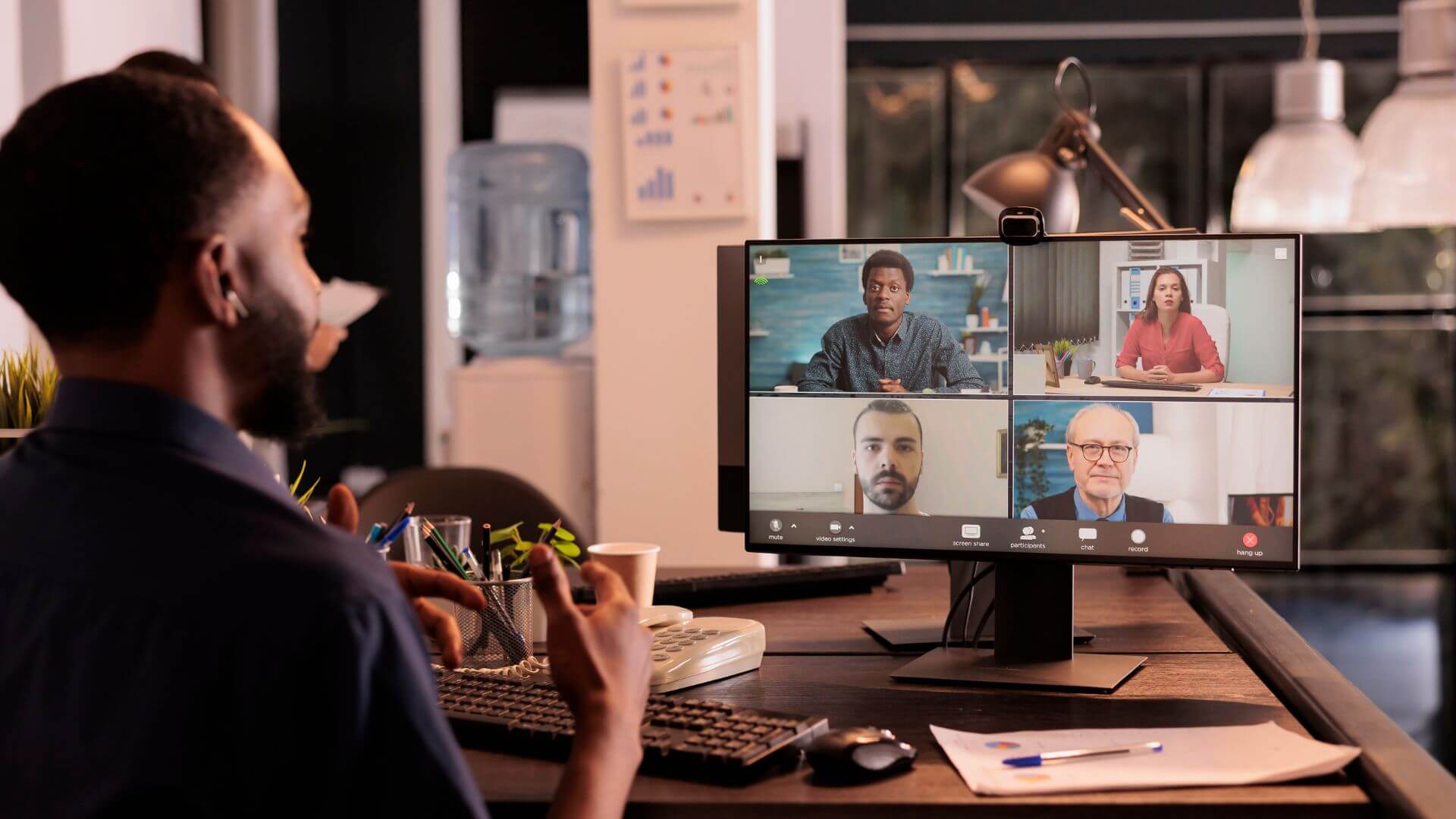
Voice over Internet Protocol (VoIP) has become a popular means of communication for businesses over the last few years.
It can accommodate the needs of most industries, but especially for businesses who operate remotely.
By using VoIP, companies and their teams can keep their communications, and subsequently their operations, running smoothly.
What Is VoIP?
With VoIP technology, voice calls can take place over the Internet as opposed to traditional phone lines. While conventional phone systems use circuit-switched networks, VoIP can convert voice signals into digital packets of data that can then be transmitted over an Internet connection.
VoIP systems usually offer a range of advanced features such as integration capabilities with other collaboration tools and video conferencing. Even though traditional phone lines can’t offer these, VoIP systems are still more affordable especially for international calling.
It’s also relatively easy to add or remove VoIP user lines as you need them without any hardware concerned, which can be costly. This offers a level of scalability that conventional systems can’t offer, making them the communication tool of choice for modern businesses.
How Does VoIP Support Remote Work?
The Covid-19 pandemic was instrumental in the adoption of remote work when employees were forced to work from home. Fast forward five years, and a lot of businesses have chosen to keep the business model, or introduce hybrid working where some days are spent in the office and some at home.
This is due to the fact that two thirds of employees feel that they are more productive when working from home, and companies who are able to offer that have seen the benefits of remote work first-hand.
VoIP systems are particularly beneficial for remote workers because they can stay connected from wherever they are, as long as they have a stable Internet connection.
Most advanced VoIP systems will offer call routing or virtual phone numbers which makes it possible for employees to still work as a team without being in the same physical location.
It doesn’t seem like remote working will disappear any time soon as its proven to offer the same level of productivity as in-office, so a few experts have shared their thoughts on how VoIP is accommodating this widely-adopted business model.
Our Experts
- Thomas Balogun: Charted Cybersecurity Professional (CSyP) & Cybersecurity Expert.
- Juliet Moran: Founder of TelephoneSystems.Cloud.
- Zach Bennett: Microsoft Teams MVP / Principal Architect at LoopUp.
- Eamonn Turley: CEO of Multi Quote Time.
- Paul Grant: Channel Manager UK & I at Snom.
- Gagan Saini: CEO of We Buy Houses.
- Ian Oswell: Business Development Director at FLR Spectron.
Thomas Balogun, Chartered Cybersecurity Professional & Cybersecurity Expert

Juliet Moran, Founder of TelephoneSystems.Cloud

Since the Employment Rights Bill was approved in April 2024, businesses have had to implement communication solutions to better support the needs of flexible working patterns. The changes have meant that more employees have been able to work from home and have more control over their schedules to balance their professional and personal lives.
With businesses now having to embrace hybrid and remote working, VoIP is key to ensuring processes can run smoothly from anywhere. One huge advantage is that it allows workers to answer the same business phone number wherever they are working from, and make outbound calls with the same number too.
VoIP facilitates unified communications by integrating diverse communication channels such as instant messaging, voice calls, and video conferencing which offers a centralised platform. It also enables employees to utilise a variety of devices, including tablets, laptops, and smartphones, along with collaborative tools like file sharing and meeting rooms, to promote a seamless flexi-working environment.
With reporting, call recording and CRM integration, it also ensures total transparency for the company to see calls made and answered by staff to ensure staff are doing their job. VoIP systems are also relatively cheap to set up and run, meaning little investment is required from businesses.
Zach Bennett, Microsoft Teams MVP / Principal Architect at LoopUp

VoIP has become essential for remote work, providing flexibility, scalability, and cost savings. However, its reliability can be affected by factors like internet bandwidth, network congestion, and home Wi-Fi stability—especially when large numbers of employees work remotely at the same time.
VoIP solutions are dependent on internet bandwidth, which can vary widely among remote workers. Network congestion, especially during peak usage times, can lead to dropped calls and poor audio quality. Additionally, the stability of home Wi-Fi networks can be inconsistent, further impacting experience. These challenges are exacerbated when large numbers of employees are working remotely simultaneously, putting additional strain on network resources.
Solutions like Microsoft Teams Telephony can be rapidly deployed across large enterprises—often within 24 hours—without setup costs, long-term contracts, or extensive user training. This approach remains critical for ensuring business continuity and reachability via a dedicated business phone number, regardless of location. These technologies will also remove the need for aging PBX’s and infrastructure being accessible for remote workers decreasing cyber security implications and IT overheads.
With Microsoft Teams leading the market for ‘enterprise unified collaboration’, many multinational companies are consolidating their communication tools under a single platform provider. This approach helps businesses streamline operations, reduce costs, and simplify IT management, ensuring a seamless reliable experience for employees working across multiple regions.
Eamonn Turley, CEO of Multi Quote Time

VoIP is a game-changer that accommodates remote work and offers flexibility as well as efficiency for teams.
VoIP technology permits access and utilisation of both outgoing and incoming calls over and through an internet connection. This way, remote workers will be able to stay connected to their office phone system without tethering them physically to a certain place. In fact, as many as 61% of employees aspire to work full-time remotely. VoIP makes it possible by allowing effective communication through video conferencing, call forwarding, and integration with customer relationship management (CRM) tools.
Moreover, VoIP systems are cost-effective, often reducing communication expenses by up to 50% compared to traditional phone systems. This is particularly beneficial for businesses with remote teams, as it eliminates long-distance charges and simplifies budgeting.
This way, most employees might not even realise that lack of access to the NI number prevents them from getting any form of benefit or pension. VoIP, with all the necessary communication tools in hand, enables remote employees to work more efficiently and contributes to general business continuity.
Paul Grant, Channel Manager UK & I at Snom

Remote workers face a number of communication challenges, including background noise and technical hitches, such as lost contact numbers or unreachable colleagues. They may also struggle to contact customers, with their personal phone number being displayed on calls rather than a company one.
VoIP can help overcome these – ensuring business communications are conducted smoothly, no matter where an individual is working from. As VoIP phones are highly mobile and don’t require physical installation of a new phone line, they can be relocated anywhere on an IP network and will automatically reconnect.
This means employees working remotely can access all the essential features they would use in the office – such as their phonebook, call recording and automatic call forwarding if they are away from their screen.
As well as being quick and reliable communication tools, VoIP phones are also more secure
than personal devices such as mobiles. Regular firmware updates and encryption measures
help to safeguard communications, keeping sensitive information protected from hackers.
Gagan Saini, CEO of We Buy Houses

VoIP technology has been indispensable for remote work, offering the ability to communicate without boundaries of location. My teams are able to conduct video conferences crystal-clear, share screens during property evaluation, and do virtual property tours with clients, all from different cities across Central Valley.
When I transitioned my real estate business into remote operations, VoIP helped us save almost 40% of communication costs compared to a traditional phone system. Our agents can take their calls with their business lines on any device, where they may end up dialling virtual property tours or reviewing contracts at home. This mobility makes my team work a lot faster now, as they can respond to customers quicker and close deals more effectively.
Remote work security was one of the initial concerns; however, modern VoIP solutions have provided enterprise-grade encryption and authentication. My team utilises multi-factor authentication and end-to-end encryption to keep all our sensitive real estate discussions and document sharing confidential and ensure our clients are at peace, regardless of where our agents work.
Ian Oswell, Business Development Director at FLR Spectron