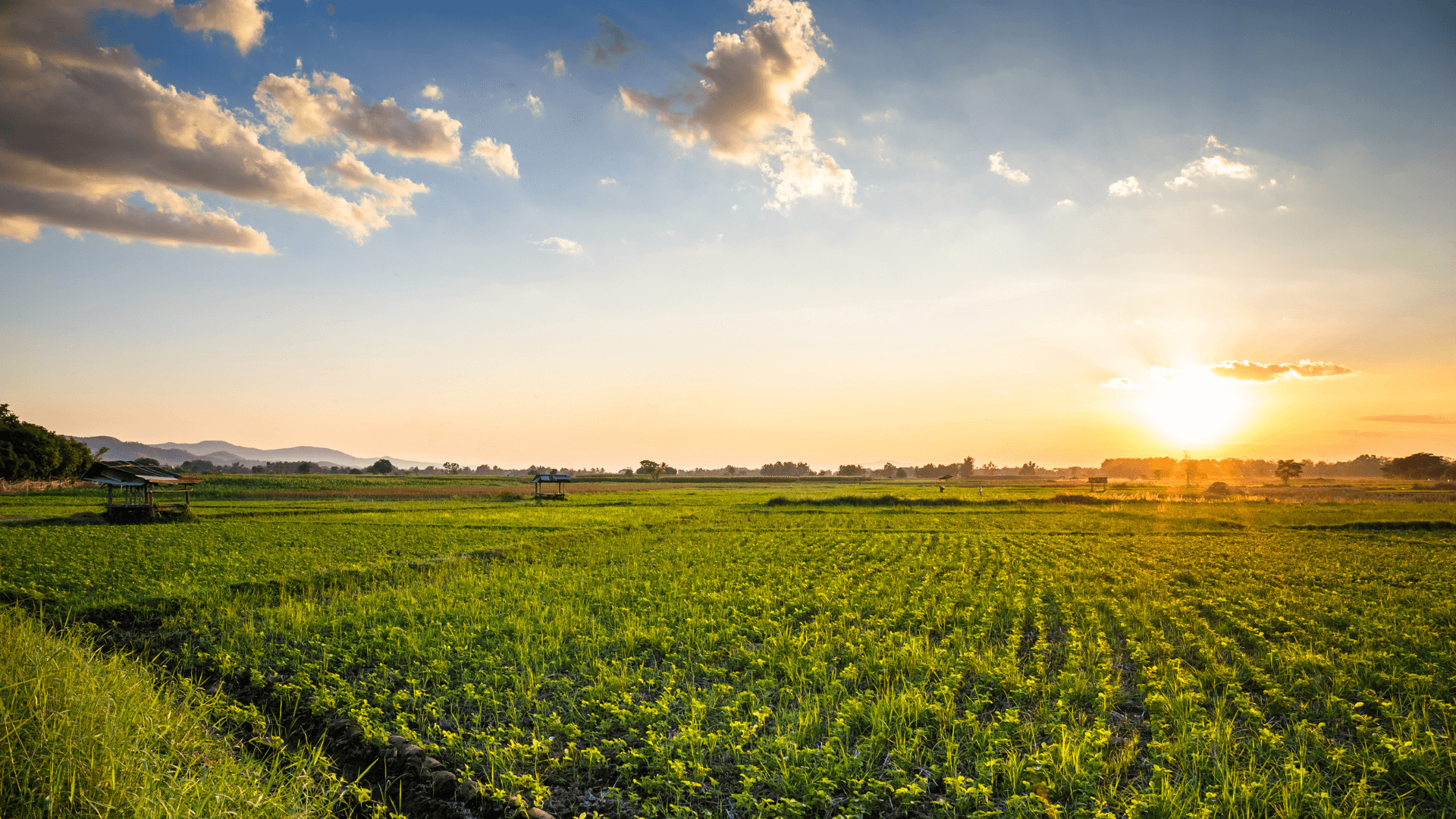
Farming has always relied on experience and a deep understanding of the land, with some instinct from time to time. But today, it’s becoming far more connected. And experts can agree on one thing – mobile broadband is forming the foundation for smart agriculture.
In short, farmers can make quicker, better decisions in an environment that is becoming increasingly complex.
Challenges from unpredictable weather to a growing global food demand, it’s clear that farmers need tools to help them work smarter, not harder. And in these areas where fixed Internet is usually limited or completely unavailable, mobile broadband is bringing reliable connectivity.
Our Experts
- René Wheeler: Director at SOLAAS LTD
- Nassira Sennoune: Digital Marketing Specialist at Rhillane Marketing Digital
- Laviet Joaquin: Head of Marketing at TP-Link
- David Kubarycz: SVP of Engineering at Bigleaf Networks
- Bob Gourley: Chief Technology Officer of OODA and author of The Cyber Threat
- Mircea Dima: CTO, CEO, Founder and Software Engineer of AlgoCademy
- Duncan Griffiths: Head of Sales at M2M & IoT Connectivity, Cellhire Ltd
- Ted Curtis: Senior Engineer at NETSCOUT
- Chrystel Erotokritou: Senior Manager, Space & Connectivity at Access Partnership
René Wheeler, Director at SOLAAS LTD

“Mobile broadband is the backbone of smart agriculture, enabling real-time data exchange and automation across vast rural landscapes. Modern farming increasingly relies on precision technologies IoT sensors, drones, and AI-driven analytics to optimise irrigation, fertilisation, and crop monitoring. These tools demand high-speed, low-latency connectivity, which mobile broadband provides, especially with advancements in 4G, 5G, and emerging 6G networks. Reliable connectivity ensures farmers can access cloud-based platforms for predictive analytics, integrate edge computing for rapid decision-making, and deploy autonomous machinery without interruptions.
Beyond operational efficiency, mobile broadband supports sustainability goals. By enabling precise resource management, farmers reduce water usage, minimise chemical inputs, and lower carbon footprints. It also bridges the rural digital divide, fostering economic resilience through access to e-commerce and market intelligence. However, coverage gaps remain a critical challenge underserved agricultural regions risk being excluded from these benefits. Hybrid models combining LPWAN and cellular networks offer promising solutions for cost-effective, ubiquitous connectivity.
In essence, mobile broadband is not just a communication tool; it is the infrastructure powering the transformation of agriculture into a data-driven, climate-smart industry. Its role is pivotal for meeting global food security demands while promoting environmental stewardship.”
Nassira Sennoune, Digital Marketing Specialist at Rhillane Marketing Digital

“Mobile broadband is what quietly turns modern farming ideas into day-to-day reality.
On the ground, it’s the difference between collecting data and actually being able to use it when decisions matter. Sensors in the soil, connected weather stations, livestock trackers, or GPS-guided equipment only become useful when they can send information reliably and continuously from the field to the farmer.
What’s often underestimated is how much agriculture depends on real-time visibility.
Farmers don’t just need data at the end of the day they need alerts when irrigation should change, when crops show early signs of stress, or when equipment is about to fail.
Mobile broadband makes this possible without forcing farms to build complex or costly private networks, which is especially important for small and medium-sized operations.
As connectivity improves, farming becomes less reactive and more anticipatory. Instead of responding to problems after they appear, farmers can act earlier, reduce waste, and manage resources more precisely. This is particularly critical as climate conditions become less predictable.
Looking ahead, smart agriculture won’t be defined by a single device or platform.
It will be defined by how smoothly data flows across the entire farm ecosystem. Mobile broadband is the connective tissue that enables that flow, making digital agriculture practical, scalable, and accessible rather than experimental.”
Laviet Joaquin, Head of Marketing at TP-Link

“Smart agriculture usually fails when connectivity can’t be relied on. Mobile broadband isn’t the solution by itself, but everything else depends on it. When connections drop or fluctuate, even good software and automation stop working the way they should.
In real use, mobile broadband connects sensors in the field, equipment that is always moving, and the systems that help people make decisions. In many rural or remote areas, fixed networks simply aren’t available. That makes mobile broadband the only realistic way to stay connected as work is happening.
What we see again and again is this: when connectivity drops, automation slows down, monitoring becomes unreliable, and data shows up too late to be useful. The system may still exist, but teams stop trusting it. Instead of planning, they end up reacting to problems as they happen.
When broadband is reliable, timing improves, and data becomes more consistent. Teams spend less time fixing issues by hand and more time keeping operations running smoothly.
The biggest limits are still coverage, power, and network stability. As smart agriculture grows, reliable connectivity will matter more than adding new tools or features.
Smart systems only work when the connection does.”
David Kubarycz, SVP of Engineering at Bigleaf Networks

“Mobile broadband is what makes smart agriculture actually possible. It ties together the tools that now sit at the core of farming, (remote sensors, automated machinery, weather monitoring, data platforms, etc.), and without consistent and high-speed wireless access, those tools either slow down or just fail completely.
The expansion of 5G and LTE into many rural areas, that we’ve been seeing for almost the past decade, has pushed real time decision making into parts of the world that used to run on guesswork. We work with tons of farms for this very reason, since many of them are situated in rural areas, so the beautiful thing is they can now monitor crop health, adjust irrigation, or reroute equipment based on real, live data, even when they’re miles away from the nearest wired infrastructure, which was not the case just five to seven years ago.
But availability isn’t enough to keep operations running smoothly. The main issue I see time and time again is the combination of inconsistent throughput, unreliable coverage, and unstable failover setups, all of which can shake up operations at the absolute worst moments. Infrastructure that adapts and prioritises critical traffic, keeping data flowing when one link drops is what’s necessary to keep systems running without interruption and avoid costly downtime.
This is exactly what I have developed at our company for years, SD-WAN, or even better for farms in rural areas, Hybrid-WAN, a combination of wired broadband and wireless (LTE/5G). Smart agritech depends on uptime completely, and mobile broadband is baked into the workflow in agriculture nowadays, so it defines how work gets done in the field.”
Bob Gourley, Chief Technology Officer of OODA and author of The Cyber Threat

“Agriculture has been regarded as speculation disguised as tradition for a very long time.
Mobile broadband quietly reverses that. It changes agriculture from passive to proactive. Farms turn from lonely fields into live data systems when they have dependable mobile internet. Before plants wilt, soil sensors can detect moisture stress. Alerts for the weather come in time to safeguard yields, not after damage has already occurred. Farmers now see conditions develop in real time right on a phone; they no longer rely on brokers or delayed reports.
Accessibility counts above anything else. Mobile broadband finds farmers at their current level. Basic smartphones transform into a control centre: tracking livestock mobility, monitoring irrigation, checking market costs, and even accessing digital credit. Particularly for smallholder farmers who have historically been kept from sophisticated tools, that sort of immediacy is revolutionary.
Also there is a trust component. Decisions feel concrete, not abstract, when information comes straight from your property and your animals. You use fertiliser only in the necessary locations. You cut waste, help the earth. Over time, productivity increases without turning the land barren.
Smart farming is not about dazzling technology. It concerns visibility, confidence, and timing. Mobile broadband offers all three at scale.”
Mircea Dima, CTO, CEO, Founder and Software Engineer of AlgoCademy

“Mobile broadband is quickly emerging to be the foundation of the contemporary farming. More rapid connectivity would enable farmers to access collected data in real-time via sensors on the soil moisture, crop wellness, and weather conditions. With low-latency mobile networks, I have observed situations where startups have interconnected irrigation systems and autonomous machinery and transformed decisions previously taking long becoming immediate actions. Those farmers who apply related solutions will receive the pests or water stress cue on-time and boost the workload, as well as preventing wastage.
Technologically, it is difficult to combine mobile broadband, AI, and IoT tools in an efficient way. The networks should be robust in the remote locations and the computers and mobile devices should have lean software that will facilitate data processing locally without straining the bandwidth. There are no tolerated deviations when it comes to smart agriculture which can cause large errors, and this is exactly why small delays or breaks in the information flow translate into large deviations and cause other mistakes in the learning algorithms in my experience.
Mobile broadbands, sensor networks and smart systems are transforming farming into an industry that is data-driven. It converts the intuitive choice into quantifiable results and makes efficiency and sustainability ideal.”
Duncan Griffiths, Head of Sales at M2M & IoT Connectivity, Cellhire Ltd

“IoT connectivity should be the choice for Smart Agriculture. Mobile Broadband can appear to represent a lower cost than IoT Connectivity, where data accessibility and security aren’t major concerns. Where they are, users should ask, “What is the most appropriate connectivity solution?” “Mobile Broadband or IoT SIMs?” “And what about security?”
Mobile Broadband SIMs carry significant risk – of failure, security breaches and disconnection, presenting risk to the end solution, customer and reputation.
Smart Agriculture solution requirements should be based around reliable, secure connectivity, local, global and roaming networks, multiple technologies, intelligent pricing and security, and supported by access to real time data.
Mobile Broadband SIMs use the public internet, making it very difficult for the user to gain remote access to the device. In contrast, IoT SIMs use private static IP addresses in combination with a VPN, public static IP addresses and private APNs – meaning a device is secure and can be accessed remotely.
Smart agriculture solutions should not be defined by the use of a single network, a single technology, single tariff – or, critically, using a public APN. Mobile Broadband SIMs are often more expensive and very risky. The contrast with IoT SIMs could not be greater.”
Ted Curtis, Senior Engineer at NETSCOUT

“The sunsetting of 2G and 3G technologies by public network suppliers has forced a technical revolution in agriculture. Driven by innovations in mobile broadband, particularly private 5G networks, smart agriculture has transformed how farms operate. For instance, a government-backed project in Sussex has seen farms in the region deploying high-bandwidth private 5G networks to enable precision farming, real-time monitoring and automated production systems.
Nevertheless, smart farming requires mobile broadband that is secure. Without this, farmers risk reduced reliability and limited visibility across increasingly complex network environments, undermining the safety, traceability, efficiency and planning capabilities that define the modern food supply chain. Solutions that provide real-time, end-to-end visibility are therefore essential, as they enable communications service providers and private 4G/5G system integrators to support farmers with continuous monitoring, analysis and assurance of network performance.
Ultimately, smart agriculture must help achieve the goal of sustainable, efficient, and profitable farming. Mobile broadband in the form of private 5G networks possess the proven capabilities to act as a catalyst for the tireless efforts of farmers, who must achieve these goals while competing on an unprecedented scale.”
Chrystel Erotokritou, Senior Manager, Space & Connectivity at Access Partnership

“While 5G and mobile broadband often grab the headlines for their potential to enable connected farming, the reality is more nuanced as no single technology will “solve” smart agriculture on its own. Instead, farms will increasingly rely on a hybrid mosaic of connectivity modes including 5G, IoT, satellite, private networks and LPWANs, each chosen for fit-for-purpose performance and economics.
Public mobile broadband and 5G bring high throughput and low latency that are critical for data-intensive, real-time use cases such as autonomous machinery coordination, drone video feeds, and large-scale AI analytics. This makes them compelling for industrial farms with the scale and budget to invest in advanced connectivity.
Yet many sensors and IoT devices in agriculture generate narrowband telemetry that LPWAN technologies (including NB-IoT) handle more cost-effectively, especially in remote or energy-constrained environments. Meanwhile, satellite IoT and non-terrestrial networks are closing coverage gaps, ensuring even the most isolated fields and livestock get reliable connectivity without expensive terrestrial infrastructure. Private 5G networks are also emerging as a strong option, offering cellular-grade performance with coverage and security that can be tailored to the needs of large farm.
Smart agriculture is likely to evolve through a mix of connectivity technologies, selected and integrated based on practical considerations such as cost, latency, bandwidth, energy use and geographic coverage.”