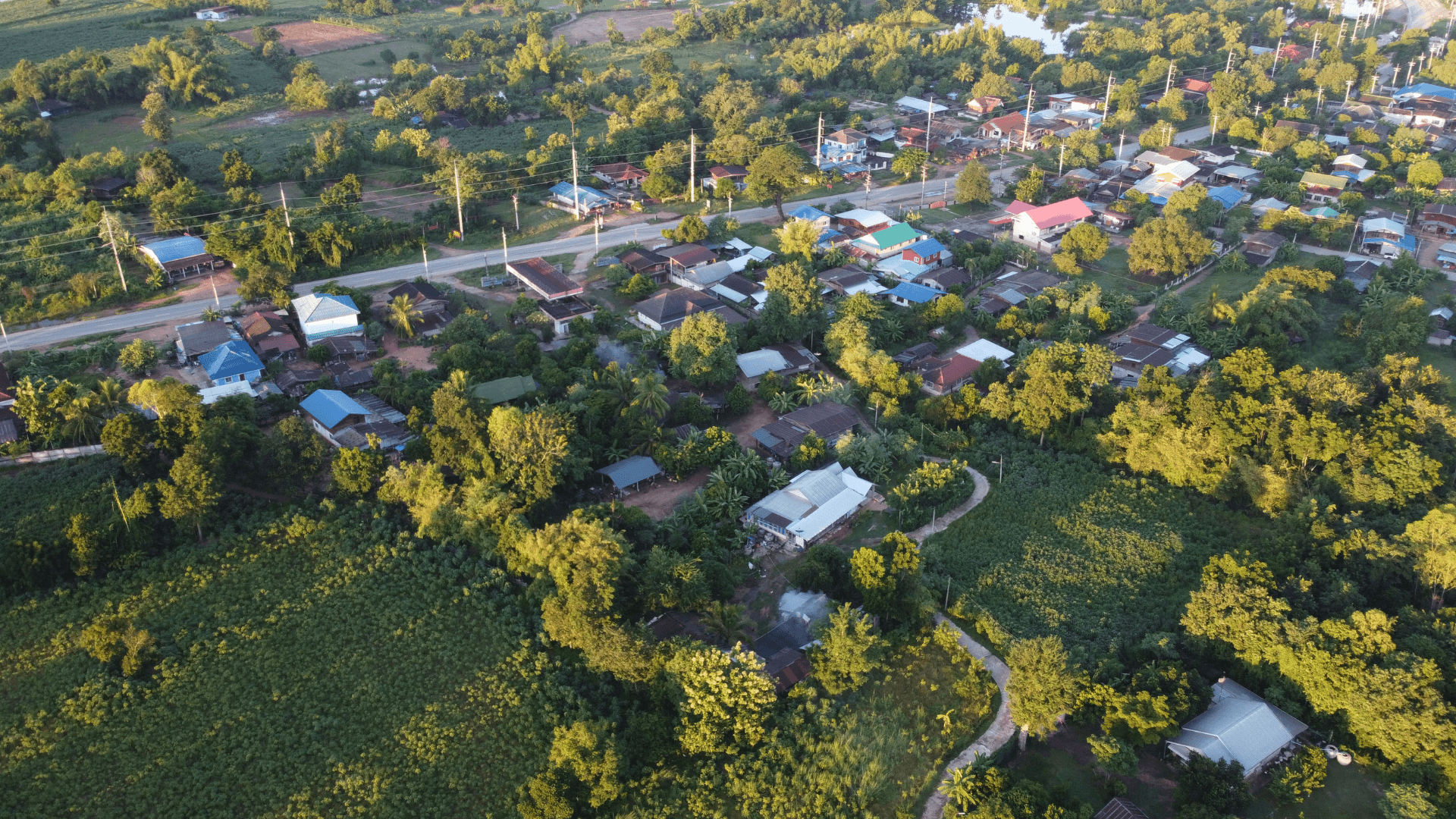
Most rural economies have often been dealt an uphill battle. With limited infrastructure and fewer employers, populations have shrunk and formed a cycle that generations of policy have struggled to fix.
When it comes down to it, investment follows people and people follow jobs. Both tend to follow cities. For the communities left outside of that loop, the gap between urban and rural economic opportunity has only widened.
But one factor exists that has the power to shift that equation. More than roads, more than subsidies and more than relocation incentives – and that is access to fast, reliable connectivity. Broadband infrastructure and mobile networks are allowing businesses to operate from anywhere, skilled workers don’t necessarily need to be in the same place and ultimately, to push economic growth.
A few industry experts share their thoughts on how connectivity can boost rural development, and if it’s moving fast enough to make a real difference.
Our Experts
- Rachel Watkyn OBE: Founder of Tiny Box Company
- Billy Rhyne: Founder & CEO of Horseshoe Ridge RV Resort
- Anita: Founder of MYQER
- Abi Hill: Founder & CEO of Just Starting Out
- Graeme Gordon: CEO of Converged Solutions Group
- Saddat Abid: CEO of Property Saviour
- James Gray: Managing Director of Graystone Strategy
- Duncan Griffiths: Head of Sales at M2M & IoT Connectivity, Cellhire Ltd
Rachel Watkyn OBE, Founder of Tiny Box Company

“Having built and grown a business employing more than 80 people from a rural part of Sussex, I have seen firsthand how important connectivity is in closing the economic gap between urban and rural areas. There is a perception that ambitious businesses need to be based in major cities to succeed, but that simply isn’t the case. With reliable broadband, strong digital infrastructure and good transport links, rural businesses can access customers across the UK and internationally, recruit talented employees, and compete on a level playing field with city-based companies.
For many rural businesses, connectivity is the difference between growth and stagnation. Technology has enabled us to reach customers nationwide, embrace e-commerce and create employment opportunities in an area where many people might otherwise have to commute long distances for work.
However, there are still challenges. Too many rural communities continue to experience inconsistent broadband coverage and limited transport options, which can make it harder to attract talent and support business expansion. Continued investment in both digital and physical infrastructure is essential if we want to unlock the full economic potential of rural Britain.
Closing the urban-rural economic gap isn’t about relocating businesses to cities; it’s about ensuring rural businesses have the same access to the tools, networks and infrastructure they need to succeed. When that happens, businesses create jobs, support local economies and contribute significantly to national growth.”
Billy Rhyne, Founder & CEO of Horseshoe Ridge RV Resort

“Connectivity is what separates a rural place people visit from a rural place people can actually earn a living in. I’ve watched it happen on 31 acres.
We run a resort in the Texas Hill Country, 45 minutes from Austin but far enough out that the cell signal drops on the drive in. When we built it, we ran fiber to every site and hardwired internet at each pedestal, not for luxury but because our guests had changed. A fair number of them aren’t on vacation. They’re full-time RVers and workampers running real businesses from a folding table under an oak tree, taking client calls between Austin and San Antonio.
That’s the urban-rural gap in miniature. The land was cheap and beautiful long before we got there. What unlocked it economically was a fiber line. Without it, the same acreage is just scenery. With it, a remote worker can live two hours from the nearest office and keep the job.
If you want rural economies to hold onto people instead of exporting them, start with the boring infrastructure. Pavement and broadband beat any tax incentive. People will move to the country. They won’t move off the grid.”
Anita, Founder of MYQER

“When people discuss the urban rural divide, the conversation often focuses on broadband speeds and infrastructure. Those are important, but connectivity is also about access to information.
Families in rural communities can face longer travel times, reduced access to services, and greater reliance on schools, carers, and local networks. In an emergency, critical information is often fragmented across paperwork, apps, organisations, or individual memory.
I created MYQER after my daughter experienced anaphylaxis. The platform allows essential emergency information to be accessed within seconds through a QR code, helping ensure that important information remains available wherever a person is, regardless of geography.
For me, closing the gap is not only about connecting places. It is about connecting people to the information and support they need when it matters most.
Inclusion, accessibility, and resilience should be considered part of the connectivity conversation, particularly for people with disabilities, medical conditions, and other invisible vulnerabilities.”
Abi Hill, Founder & CEO of Just Starting Out

“Connectivity is no longer just about accessing the internet. It’s about accessing opportunity.
Twenty years ago, where you lived had a huge influence on the opportunities available to you. If you lived in a rural area, your options were often limited to the employers, training providers and professional networks within travelling distance. Today, digital connectivity has fundamentally changed that equation.
As the founder of Just Starting Out, I regularly speak to aspiring entrepreneurs from rural and coastal communities who are building businesses, learning new skills, attending networking events and securing customers from across the UK without ever leaving their local area. For many, connectivity has removed barriers that previous generations simply accepted as part of life.
However, access to technology alone isn’t enough. We must ensure people have access to the skills, confidence, support networks and resources needed to make the most of it. There is a significant difference between being connected to the internet and being connected to opportunity.
If we want to close the urban-rural economic gap, we need to stop viewing connectivity as a technical issue and start recognising it as an economic one. When people can access knowledge, customers, mentors and markets regardless of their postcode, talent is no longer limited by geography.
The future of economic growth won’t be determined by where people live. It will be determined by what opportunities they can access.”
Graeme Gordon, CEO of Converged Solutions Group

“The economic case for rural connectivity has never been stronger. When communities get reliable internet connection, the ripple effect is significant – research shows it can generate up to £6 million in social and economic benefits per community, flowing through farming, fishing, tourism and beyond. With tourism already contributing over £4 billion to the Scottish economy, and good connectivity unlocking £3.4 billion in new revenue for British tourist businesses annually, the stakes for getting this right are enormous.
The economic impact goes further. Improved infrastructure enables remote working, keeping skilled professionals and their spending power in local communities. Businesses can better promote themselves online, access new audiences through digital marketplaces, and benefit from online banking and enhanced cybersecurity – all driving productivity and local economic resilience.
But investment in infrastructure alone isn’t enough – closing the gap requires joined-up thinking between government, industry, and connectivity providers to ensure policy and funding reach the communities that need it most.
Progress is real – but pockets without reliable internet connection remain. At Converged Solutions Group, we understand that one-size connectivity doesn’t fit every community. With a mix of fixed, wireless, and satellite solutions, we’re here to support the growth of businesses and communities where it matters most.”
Saddat Abid, CEO of Property Saviour

“Connectivity has quietly become the single biggest factor deciding whether a rural area thrives or empties out. In the property market, we see it plainly: a village with reliable full-fibre broadband attracts buyers, remote workers and small businesses, and prices hold up. A near-identical village ten miles away with patchy connection struggles to sell at all.
That’s the urban-rural gap in miniature. For decades the countryside lost talent to cities because the jobs were there. Connectivity changes the maths — you can now run a business, hold a client meeting or earn a city salary from a farmhouse, but only if the infrastructure lets you.
Where good broadband arrives, we see demand follow: younger buyers move in, local shops survive, and the area’s economy stops shrinking. Where it doesn’t, those communities stay locked out, regardless of how affordable the housing is.
So connectivity isn’t a ‘nice to have’ for rural Britain — it’s the deciding line between places that grow and places that decline. If we’re serious about closing the economic gap, full-fibre and reliable mobile coverage should be treated as essential national infrastructure, exactly like roads and railways were a century ago.”
James Gray, Managing Director of Graystone Strategy

“Until now it’s been difficult to justify investment and resource in sparsely populated areas, leading to a social and economic urban-rural divide. It’s effecting everything from education and healthcare to remote working.
However, new tech like low-earth orbit satellite networks, could be transformative. Take Starlink’s direct-to-device capabilities, they are proving that satellite is evolving from a niche solution into a mainstream one as huge landmasses, and remote parts of the world are connected. It’s no longer just available for emergency situations.
It all requires regulatory support, however. In the UK there are strict rules about protecting airspace safety, for example. Nonetheless the door is open for satellite to launch. O2 already has live services, whilst Vodafone announced trials for this summer.
Currently, these services offer limited bandwidth and the speeds are not the same as you’d expect from mobile but by 2027 that will change as new satellites launch. By then the headlines will be ‘get 5G-class speeds from orbit’.
Though we’ll mainly see B2B adopt it first, using it for things like internet of things connectivity, O2 is already pushing a consumer offer. For the consumer, buying services from a known brand, and one they already subscribe to makes sense, and I’ve no doubt it will help boost adoption of satellite services, whilst improving customer experience and satisfactions with the host network.
The economic impact should not be underestimated either. Greater connectivity for workers or connected devices will help the economy to grow. Connectivity will soon become a universal utility rather than a geographic privilege, allowing rural communities to participate fully in the digital economy and overcome the associated divide.”
Duncan Griffiths, Head of Sales at M2M & IoT Connectivity, Cellhire Ltd

“The digital economy is often used in more urban terms. However, since Covid, working and shopping habits have led to a more non-urban led digital economy.
From our IoT perspective, connectivity remains a key enabler in terms of growth, innovation, and access to services.
While urban areas often benefit from ubiquitous network coverage and digital infrastructure, rural communities continue to face challenges which can limit opportunities.
Connectivity can help bridge this gap across sectors and activities in utilities, transport, healthcare, where reliable IoT connectivity enables remote monitoring, asset tracking, smart agriculture, environmental management, and digital service delivery in locations where traditional infrastructure may be limited.
Ensuring robust multi-network connectivity is a must, because it provides resilient coverage to help organisations and individuals maintain visibility and operational efficiency regardless of location. IoT SIMs play a vital role where needed.
By extending access to connected technologies beyond major urban centres, businesses can improve productivity, reduce costs and create new opportunities for economic development.
Helping close the urban-rural connectivity divide is not simply a technology challenge; it is an economic imperative.
Investment in resilient, scalable connectivity infrastructure will be essential to ensuring that communities, businesses and individuals can participate fully in the digital economy.”