
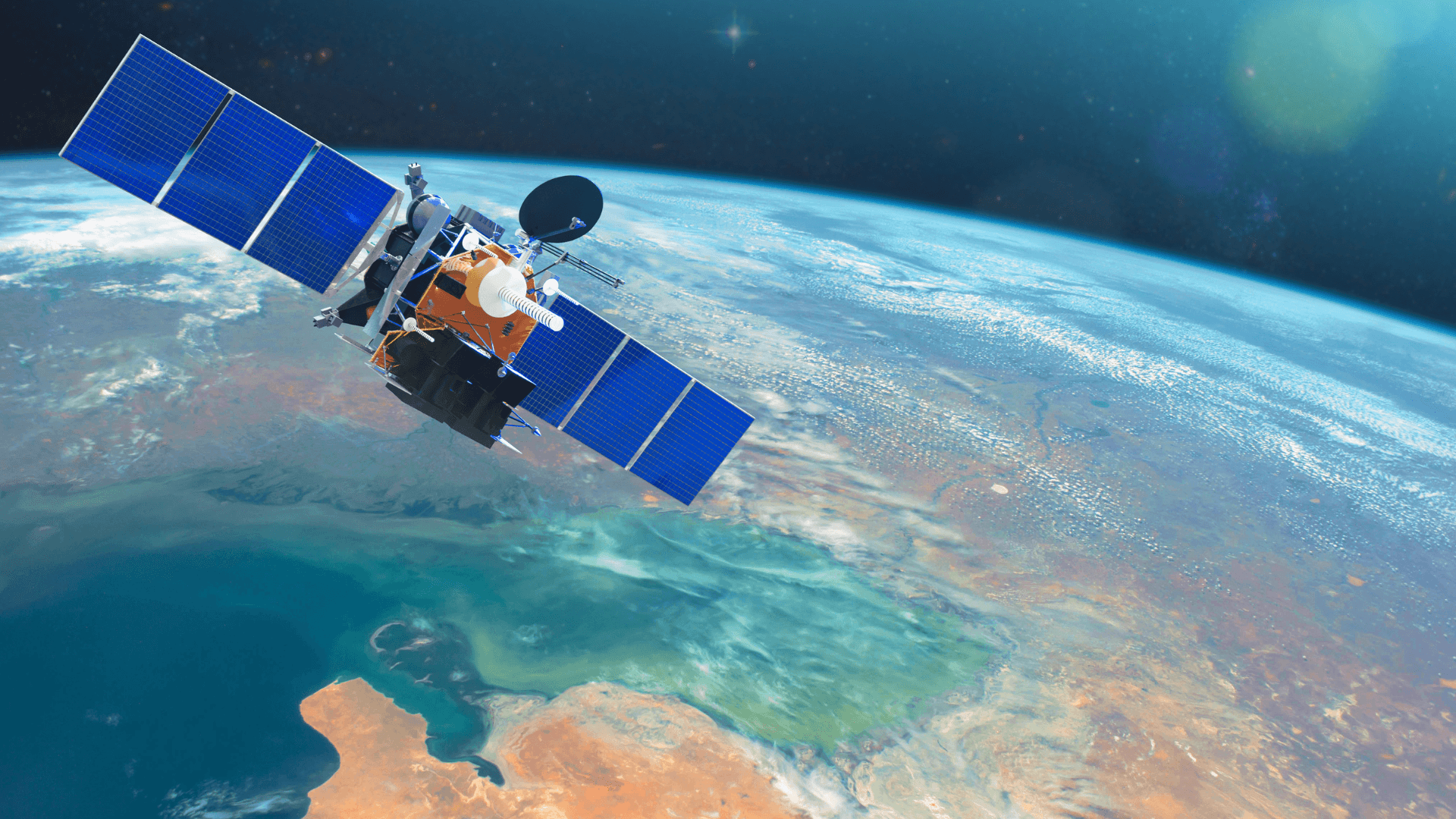
For years, satellite Internet has come with a trade-off. Yes, you could get online instantly almost anywhere, but you paid for it in lag. Traditional satellites sit in geostationary orbit, thousands of miles out, so every click, every message has to make quite a long round trip into space before anything actually happens on your screen.
Fortunately, Low Earth Orbit (LEO) satellites fly much closer to home. When you shorten the distance, you shorten the delay and suddenly the connection feels less like a compromise and more like the broadband most of us tend to take for granted.
LEO systems use hundreds or thousands of smaller satellites moving across the sky, passing your signal between them as they go and for rural communities, that change matters. Some places were too remote to justify the cost of digging trenches and laying fibre. Others were too far from the nearest exchange to get anything usable out of ageing copper lines.
But when you’ve got a dish pointed at the sky, you’ve got a chance at a proper connection. A few industry experts share how these LEO satellites are redefining rural connectivity.
Our Experts:
- Karan Ajmera: Telecommunications Professional
- Shelli Brunswick: Founder & CEO of SB Global LLC
- Asif Alam: RF & Antenna Systems Engineer
- Jon Graves: Dyfed Telecom
- Paul Armstrong: Founder of TBD Group
- Rick Fulwiler: Senior Director of Product Management at NETSCOUT
- Tim Hatt: Head of Research & Consulting at GSMA Intelligence
Karan Ajmera, Telecommunications Professional

“Rural parts of the world are currently the most difficult customer base to serve by terrestrial networks. Extending connectivity here requires significantly higher investment as compared to Urban areas and the size of the population covered is much lower. This investment is difficult to justify for Mobile Network Operators (MNOs) and hence coverage expansion is slow in Rural communities.
LEO, however, presents a fundamentally different proposition. The real challenge for terrestrial networks has been the physical infrastructure needed to get the signal to the right place. Backhaul availability, power infrastructure and maintenance costs all add up to the challenge of rural deployment. LEO moves the entire physical infrastructure into the sky and hence makes coverage expansion much simpler for rural areas.
Based on current deployment standards, LEOs can provide about 30-60ms of latency, which makes them extremely viable for applications that genuinely matter in rural settings. Use cases such as remote healthcare and agricultural IoT to real-time business operations could benefit greatly from LEO coverage. LEOs are not replacement for terrestrial networks, but a powerful complement reaching the communities where deployment has historically been most challenging.”
Shelli Brunswick, Founder & CEO of SB Global LLC

“The next innovator should not be limited by the place where they were born. A rural entrepreneur, student, farmer, physician, or community leader may have world-changing potential – but without reliable connectivity, talent can remain invisible and opportunity out of reach.
Low Earth orbit satellites can change that equation. By delivering lower-latency broadband across mountains, islands, deserts, and sparsely populated regions, LEO networks can turn space technology into a launchpad for human potential on Earth.
The impact extends far beyond faster internet. Connectivity can bring specialists into remote clinics, global learning into classrooms, real-time intelligence to farmers, markets to businesses, and communications to communities facing disaster. It can allow rural regions not merely to receive innovation, but to create it.
Yet a signal is only the beginning. Meaningful inclusion also requires affordable service, accessible devices, digital skills, reliable energy, cybersecurity, and collaboration among governments, industry, educators, and communities. LEO must complement fibre, mobile, and fixed-wireless networks within a resilient communications ecosystem.
The true breakthrough will not be connecting the last mile. It will be recognising that no community is last. When connectivity reaches people wherever they live, geography stops defining possibility – and space becomes infrastructure for imagination, resilience, and shared prosperity.”
Asif Alam, RF & Antenna Systems Engineer

“Living far from a city has often meant learning to live without a reliable connection to the world. LEO satellites are the first technology I believe can truly change that. I design the systems that make these links work. I proposed Moore’s Law for RF, hold two U.S. millimetre-wave patents, and have presented on satellite antennas in Boston, Washington D.C., Detroit, and beyond.
Here is the simplest way to understand it. Traditional satellites sit about 35,786 kilometres above Earth. Signals travel that huge distance up and back, creating a delay of half a second or more. That lag is why older satellite internet always felt like talking over a bad phone line.
The new LEO satellites orbit far closer, between 500 and 1,200 kilometres. Because the signal travels a shorter distance, the delay drops to a barely noticeable fraction of a second. A rural nurse can consult a specialist live, a student can join a class without it freezing, and a farmer can manage sensors in real time.
The last challenge is the dish on the ground. It must track satellites racing across the sky, switch between them smoothly, work through heavy rain, and still be cheap enough for an ordinary household. That is closer to solved than ever.
When it is, rural connectivity stops being something people hope for. It becomes something they simply have.”
Jon Graves, Dyfed Telecom

“We provide connectivity services to more than 5,000 customers across Wales, many of them in rural communities that have been let down time and again when it comes to broadband.
Traditional wired connectivity can be extremely challenging in rural areas, while 4G and 5G simply don’t work consistently in many Welsh valleys. For businesses, that isn’t just frustrating; it can directly limit where people can live, work and build a company.
LEO satellite technology has been game-changing. We’re seeing customers who can suddenly work effectively from home, businesses able to operate from locations where connectivity was previously a major constraint, and rural communities gaining access to speeds that would have been unthinkable not long ago.
Our own connectivity mix demonstrates how quickly things are changing. We’ve gone from around 95% of new connectivity being delivered through 5G to roughly a 50/50 split between 5G and LEO satellite, and that trend is continuing.
As technology develops and pricing becomes more competitive, I expect adoption across rural Wales to accelerate significantly. Geography no longer has to dictate whether you can get a decent internet connection.”
Paul Armstrong, Founder of TBD Group
“People often describe satellite as a replacement for terrestrial broadband, but this misses a few important points. Fibre remains preferable where it’s practical, but LEO matters most as the missing layer: serving genuinely isolated properties, linking transport routes, and stepping in when terrestrial infrastructure fails.
Trials on Scottish and Great Western railway routes, alongside the rollout across Orkney’s ferry fleet, show how much broader the use case is than rural homes. For those without the option of fibre, the numbers already tell the story: Starlink had more than 110,000 active UK connections in 2025, up from roughly 87,000 just a year before. For those households, LEO isn’t just a backup option. For many, it’s the first connection reliable enough for ordinary work, education and healthcare, and that means real money starting to flow into UK businesses.
The next big thing/issue/shift/opportunity/
Rick Fulwiler, Senior Director of Product Management at NETSCOUT

“Remote areas face higher deployment costs, greater distances between homes and unreliable mobile coverage, making traditional broadband impractical. Meanwhile, the expectation of always being connected has never been greater, with remote work, hybrid models and generative AI testing the limits of network bandwidth and latency.
To ensure connectivity and support mobile broadband in rural regions, providers must look to the stars. Low Earth orbit (LEO) satellite broadband, such as Starlink and Amazon Leo, can complement 4G and 5G networks by wirelessly connecting remote areas to the internet. For example, Starlink currently has over two million active customers in the US, with states that have large rural populations like Vermont, Maine, and West Virginia exhibiting notably high Starlink adoption.
By 2028, Starlink is expected to serve 4-5 million American households. Emerging direct-to-device (D2D) satellite technology takes this connectivity further, enabling smartphones to communicate directly with satellites – no specialist equipment required.
LEO satellite connectivity offers a resilient alternative where laying physical cables is geographically impractical or prohibitively expensive. By leveraging satellite infrastructure, broadband providers can deliver reliable, high-quality service regardless of location.”
Tim Hatt, Head of Research & Consulting at GSMA Intelligence

“Low Earth Orbit satellites are changing what’s possible for connectivity in rural areas. Reaching remote or hard-to-reach places with traditional networks alone has always been difficult, simply because it costs so much to build and maintain infrastructure across such large distances. LEO satellites help close that gap, thanks to faster, higher-capacity coverage from space complementing mobile and fixed networks.
The thing to remember is that satellites are not replacing terrestrial connectivity. Instead, operators want the two working in tandem. As satellites become more entwined with mobile infrastructure, the connectivity in these rural areas should simply improve, without needing to know or care whether they are connected via a mast, fibre or satellite.
This matters for digital inclusion, resilience and economic growth. Better rural connectivity opens the door to more opportunities – whether it is remote working, online education, precision agriculture, emergency response or local business growth. But getting there will take real collaboration between mobile operators, satellite providers, device makers and policymakers. Regulation needs to keep up too, so innovation can scale without sacrificing consumer safeguards, security and fair competition. If all parties play their part, the reward is a more resilient, inclusive connectivity ecosystem, regardless of where you are.”




 satellites are transforming rural connectivity.)