
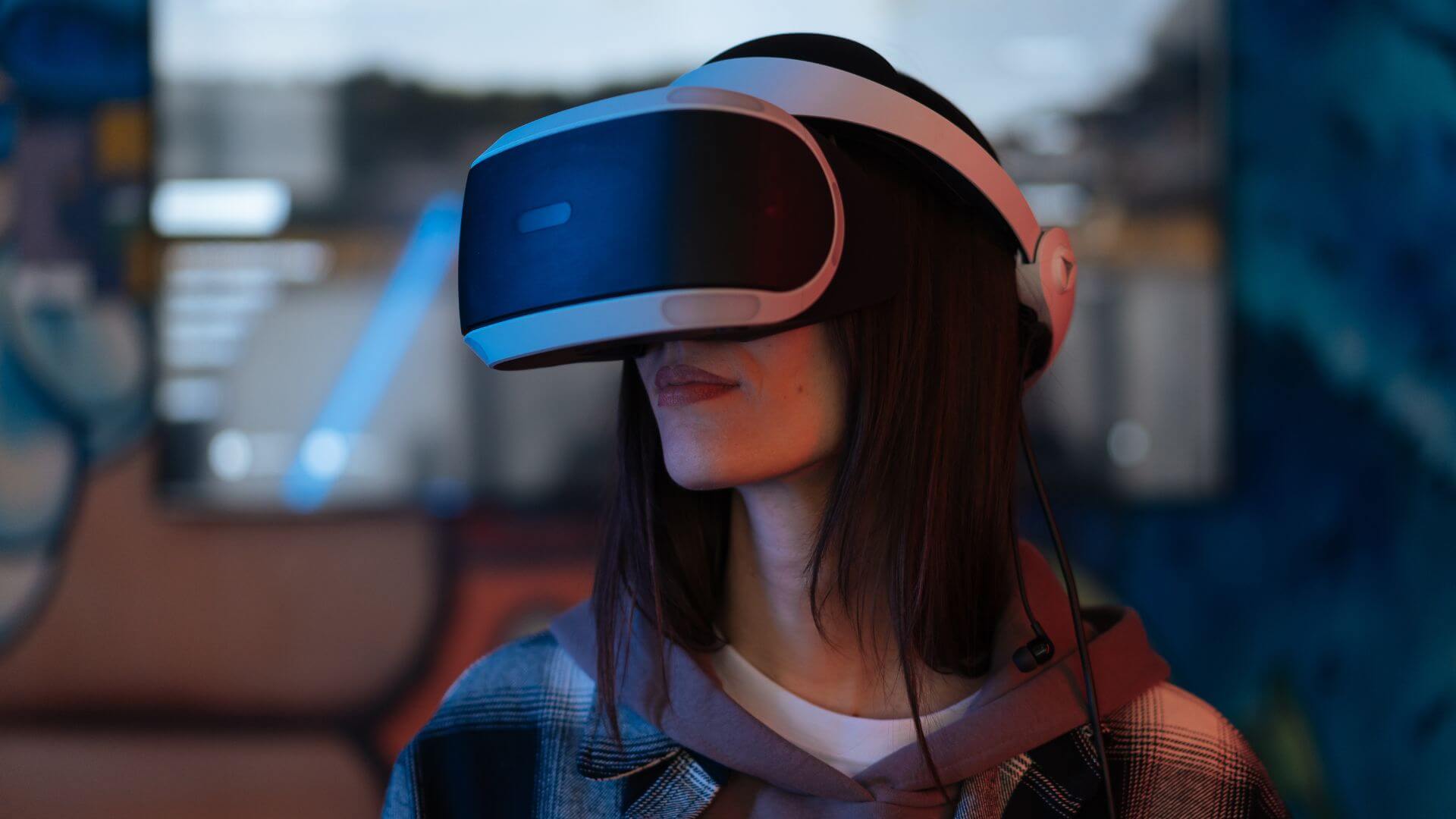
Over the past few years, augmented reality (AR) and virtual reality (VR) have matured from a niche technology into a mainstay for public uses like entertainment and education.
These immersive experiences have great potential, but their effectiveness and user experience are dependent on several considerations, with connectivity being the most important.
But how essential is connectivity for AR and VR? Let’s take a look at its role, challenges, and possible solutions.
What Is Augmented Reality (AR) And Virtual Reality (VR)?
Augmented Reality (AR) and Virtual Reality (VR) are methods of immersion designed to enhance or replicate the environment in which one is familiar with, hence the possibilities offered by immersive experience.
For example, AR can put virtual markers on streets or enable people to digitally manipulate objects while still being able to see their physical environment.
But while augmented reality thus overlays the real world with some additional information or interaction, virtual reality will try to entirely substitute the world around us for one created digitally.
The use of VR headsets immediately transports you into digitally-represented spaces where any action may be taken in a manner similar to what one would have been able to do in a physical world.
The Role Of Connectivity In AR And VR
Connectivity, which is the ability of devices to transfer information over networks, is crucial for AR and VR to work. This is due to a number of reasons.
They Rely On Cloud Computing And Edge Computing
Today’s AR and VR systems are often use cloud computing and edge computing to achieve seamless, efficient experiences. In the case of cloud computing, AR and VR applications are designed to offload data-heavy activities such as rendering complex graphics and saving large datasets onto remote servers.
As such, this type of setup allows apps such as the AR-based navigation tool to retrieve maps and real-time updates from the cloud with an assurance of up-to-date, accurate information accessed from the remote server.
Edge computing, on the other hand, allows the data to be closer to the user on the processing and cuts latency, so response speeds are faster-providing a better experience for highly latency-sensitive applications like multiplayer VR games or live AR streaming.
Data Processing In Real-Time
In order to experience high quality yet seamless and immersive experiences, both AR and VR tend to process vast amounts of data in real-time. For instance, an augment reality application would actually use external mapping and cloud databases to provide the proper interaction of a real world with a virtual one.
In this case, high-speed and low-latency connectivity is a needed to make sure that data is processed without any detectable delays in order for users to have a smooth experience.
It Enables Multiplayer Experiences
Applications that enable multiplayer interaction are increasingly defining the contemporary AR and VR environments, where dynamic and live social experiences are available.
Whether it is virtual business meetings, an interesting game in VR, or a collaborative design session influenced by AR, these experiences will depend on strong connectivity for the transfer of large amounts of information with low latency.
The Challenges With Connectivity
Both AR and VR are extremely sensitive to latency. Even a delay of a few milliseconds can result in a negative user experience, causing conditions such as motion sickness in VR and shifted images in AR overlays. Being able to achieve an ultra-low latency still remains a challenge, particularly when it comes to wireless networks.
Another issue is network coverage. While urban areas may enjoy strong connectivity, the same can’t be said for rural or outlying areas. This continued digital divide significantly limits the growth ability of these systems.
Moreover, it can also be quite costly to install high-speed networks such as 5G. As a result, some may be hesitant to use AR and VR because of the associated costs.
Is Offline AR And VR Possible?
Some systems can function without connectivity. For example, standalone VRs like the Meta Quest 3, allow for the downloading of applications and use without any internet connection.
Generally speaking, standalone applications of AR or VR exist, but there are still limitations, such as the inability to provide updates in real-time or access cloud resources. This restricts their functionality and full capabilities.