
In today’s interconnected world, understanding which internet connection is best for you is crucial. With the flexibility and mobility of mobile broadband and the reliability and stability of traditional broadband, choosing between the two can be challenging. Keep on reading to discover the differences between mobile broadband and traditional broadband and their advantages and drawbacks.
Mobile Broadband vs Traditional Broadband
Mobile broadband is the most recent form of broadband that has become readily available across most of the UK, due to the expansion of 5G networks. However, traditional broadband lines, referring to copper lines or the newer fibre optic cables, are often known to be more reliable. Both of these broadband types have advantages and disadvantages, giving businesses more options, depending on their specific needs, i.e., whether flexibility, remote work or scalability are at the top of their agendas.
What is Mobile Broadband?
Mobile broadband is another phrase for access to a wireless internet connection through mobile networks. In the same way that you can hotspot a laptop or other device from your smartphone, you can do this through other systems, including portable modems or wireless modems.
How Does Mobile Broadband Work?
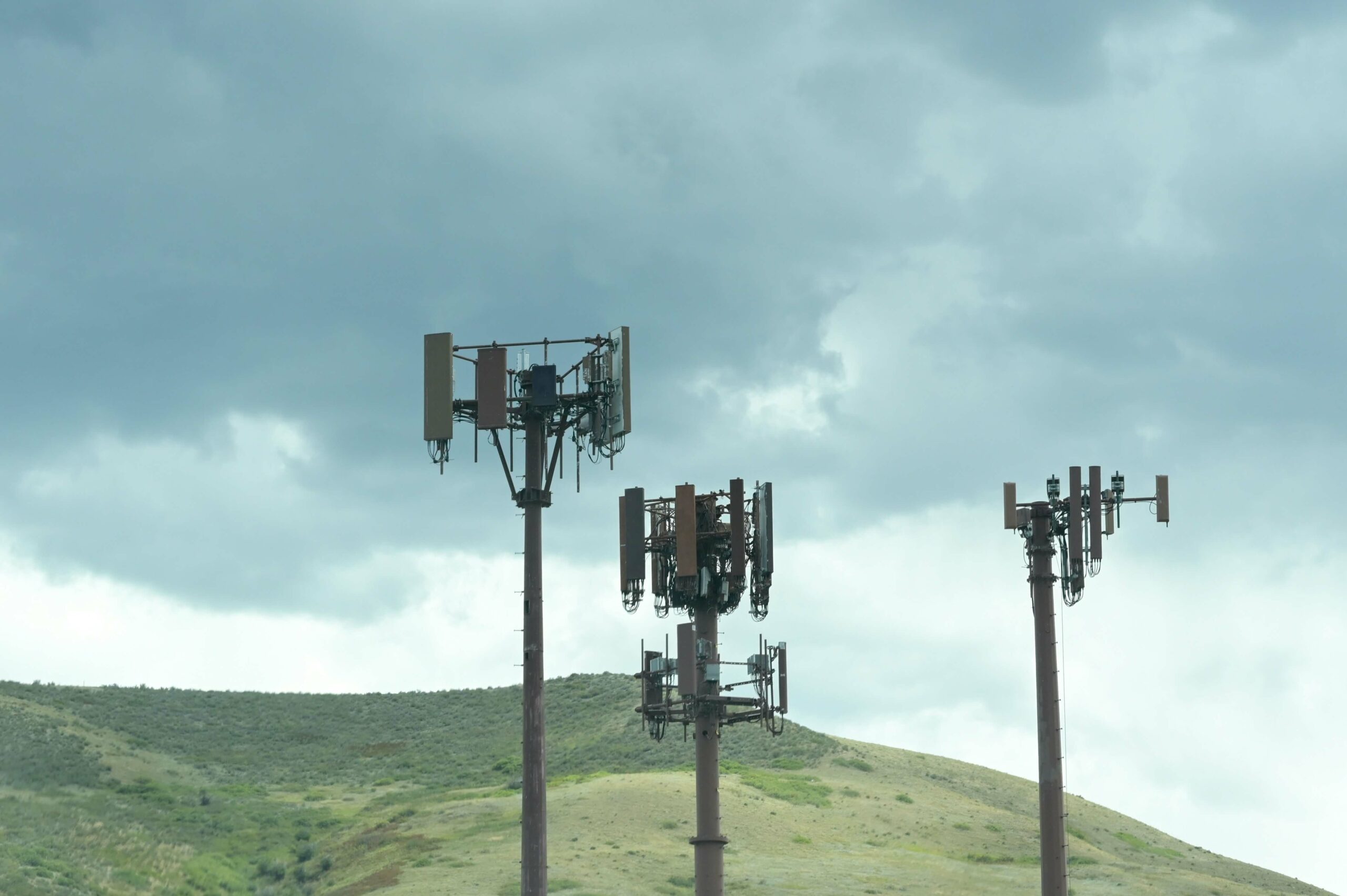
As previously stated, mobile broadband entails accessing the internet via mobile networks, where your device connects to the internet through cellular towers. This functionality is available on smartphones, smart devices, and laptops, and sometimes can support multiple devices simultaneously.
Can You Use Mobile Broadband at Home?
Yes, mobile broadband can be used in homes. This is especially useful for people who work remotely and require an internet connection or those in more rural areas where traditional broadband accessibility might not be available. As long as there is a cellular connection, users may connect to mobile broadband through their smart devices or a dongle.
Is Mobile Broadband Suitable for Business?
Although 4G broadband can offer faster speeds, it has been known to be less reliable than fixed lines. Speeds may vary depending on your location, so it’s crucial to check the coverage in your area. However, with the recent growth in the mobile network and the rollout of 5G, coverage is steadily improving in terms of speed and reliability. Having a dedicated 4G or 5G connection for working from home can be a game-changer.
Pros and Cons of Mobile Broadband
Speed
The speed of a mobile broadband connection varies depending on the user’s location. In urban or suburban areas, where 5G or even 6G connections are available, speeds tend to be significantly faster. Conversely, in rural areas where access is limited to 3G or 4G networks, connections may be slower.
Reliability
Mobile broadband users may experience fluctuations in connectivity, with areas with less cellular connectivity coverage prone to lagging or sudden network loss. Furthermore, if there is high network congestion in a region, wireless broadband users can also experience sudden loss.
Security
Although mobile broadband connectivity is safer than using public wifi, it is not guaranteed that it will be secure from hackers. A mobile broadband connection is secured by a firewall given by the mobile supplier, making the information sent and received encrypted and difficult to intercept the signal.
Benefits and Drawbacks of Traditional Broadband Services
Speed
One of the main benefits of using a traditional broadband line is that it usually offers quick and reliable connectivity. This is especially relevant with the current roll-out of the fibre-optic lines across the UK, making these connections the fastest available.
Reliability
Reliability is generally considered better with a traditional broadband service, especially if a fibre-optic cable is used. As this is the latest in internet connectivity, It transmits data using light signals through its sophisticated network of fibre-optic cables, making it the most reliable option.
Security
Traditional broadband services typically come equipped with strong security features designed to protect user data and privacy. These include advanced firewall systems that monitor and control incoming and outgoing traffic, ensuring that only authorised access is granted to the network.