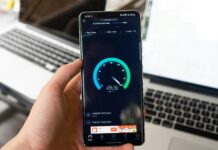
Real-time video streaming has become a core aspect of our digital lives, thanks to the rapid advancements in mobile broadband technology.
From social media live broadcasts to video conferencing and online gaming, the ability to stream video content in real-time on mobile devices has revolutionised the way we communicate and entertain ourselves.
What is Mobile Broadband?
Mobile broadband refers to high-speed internet access provided through wireless technology. Unlike traditional broadband that relies on fixed-line connections (such as DSL, cable, or fibre-optic), mobile broadband uses cellular networks to deliver internet services.
This technology leverages various generations of mobile networks, including 3G, 4G LTE, and the latest 5G, to provide internet access on the go.
How Do Mobile Networks Support Video Streaming?
Mobile networks are designed to handle a variety of data-intensive tasks, including video streaming. Here’s how they support real-time video streaming:
Bandwidth and Speed
One of the critical factors for real-time video streaming is the availability of sufficient bandwidth. Mobile broadband networks, especially 4G LTE and 5G, offer high-speed internet with ample bandwidth to support video streaming.
Higher bandwidth allows for the transmission of large amounts of data, which is essential for high-definition (HD) and ultra-high-definition (UHD) video content.
With speeds reaching up to 10 Gbps in 5G networks, buffering and lag issues are significantly minimised, providing a seamless streaming experience.
Latency Reduction
Latency, or the delay in data transmission, is a crucial aspect of real-time video streaming. High latency can lead to interruptions and a poor viewing experience.
Mobile broadband technologies, particularly 5G, are designed to reduce latency to as low as 1 millisecond. This ultra-low latency ensures that video content is delivered almost instantaneously, making real-time interactions, such as live broadcasts and video calls, smooth and uninterrupted.
What Role Do Network Infrastructures Play?
The infrastructure of mobile networks plays a vital role in enabling real-time video streaming. This includes the deployment of cell towers, base stations, and other network components that facilitate data transmission.
Small Cell Deployment
To enhance coverage and capacity, mobile networks deploy small cells, especially in densely populated areas. Small cells are low-powered cellular radio access nodes that help in offloading data from macro cells (large cell towers).
This increases network capacity and reduces congestion, allowing for smoother video streaming even in crowded places like stadiums and city centres.
Edge Computing
Edge computing is another technological advancement that supports real-time video streaming. By processing data closer to the source (at the edge of the network), edge computing reduces the distance that data needs to travel, thereby decreasing latency.
This is particularly beneficial for applications that require real-time processing, such as live video streaming and interactive gaming.
How Do Compression Technologies Enhance Streaming?
Compression technologies are essential for efficient video streaming over mobile broadband. These technologies reduce the size of video files without significantly compromising quality, allowing for faster transmission over mobile networks.
Video Codecs
Video codecs are algorithms that compress and decompress digital video. Popular codecs like H.264, H.265 (HEVC), and VP9 are widely used in video streaming. These codecs employ various techniques to reduce file size, such as removing redundant data and using predictive encoding.
This ensures that high-quality video can be streamed smoothly over mobile broadband networks without excessive bandwidth consumption.
Adaptive Bitrate Streaming
Adaptive bitrate streaming (ABS) is a technique that adjusts the quality of video streams in real-time based on the viewer’s network conditions. Platforms like YouTube and Netflix use ABS to provide the best possible viewing experience.
When network conditions are favourable, the video quality is automatically increased. Conversely, if the network speed drops, the quality is reduced to prevent buffering. This dynamic adjustment ensures continuous playback even with fluctuating mobile broadband speeds.
What Are the Challenges and Solutions in Mobile Video Streaming?
While mobile broadband has significantly enhanced real-time video streaming, there are still challenges that need to be addressed.
Network Congestion
Network congestion occurs when too many users access the network simultaneously, leading to reduced speeds and increased latency. This can be particularly problematic during peak hours or at events with large crowds.
Solutions to network congestion include the deployment of additional small cells, optimisation of network resources, and the use of advanced traffic management techniques to prioritise video streaming traffic.
Data Caps and Usage Limits
Many mobile broadband plans come with data caps or usage limits, which can restrict the amount of video streaming a user can enjoy.
To mitigate this, service providers are increasingly offering unlimited data plans or data packages specifically designed for streaming.
Additionally, users can opt for video streaming services that offer data-efficient streaming modes, reducing data consumption without sacrificing quality.
Battery Drain
Streaming video in real-time can be resource-intensive, leading to rapid battery drain on mobile devices. To address this, device manufacturers are developing more energy-efficient processors and optimising software to reduce power consumption during video streaming.
Users can also take steps to conserve battery life, such as lowering screen brightness and closing background applications.
How Will Future Technologies Impact Mobile Video Streaming?
The future of mobile broadband and video streaming is promising, with several emerging technologies set to further enhance the experience.
5G Networks
The widespread adoption of 5G networks is expected to revolutionise mobile video streaming. With significantly higher speeds, lower latency, and increased capacity, 5G will enable new possibilities such as 4K and 8K live streaming, augmented reality (AR) and virtual reality (VR) applications, and immersive gaming experiences.
Artificial Intelligence and Machine Learning
Artificial intelligence (AI) and machine learning (ML) are poised to play a significant role in mobile video streaming. These technologies can optimise network performance, enhance video compression algorithms, and provide personalised content recommendations.
AI-powered analytics can also predict network congestion and proactively manage traffic to ensure a smooth streaming experience.
Next-Generation Video Codecs
The development of next-generation video codecs, such as AV1 and VVC (Versatile Video Coding), will further improve video streaming efficiency.
These codecs offer better compression rates and improved video quality, enabling higher-resolution streams without a corresponding increase in bandwidth requirements.