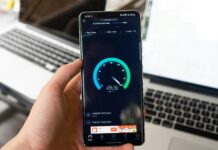
The evolution of mobile broadband from 4G to 5G is a leap forward that promises to transform the way we interact with technology. From faster speeds to lower latency and increased connectivity, 5G stands to revolutionise numerous industries, including telecommunications, automotive, healthcare, and many more.
Understanding the key differences between 4G and 5G can help consumers and businesses make informed decisions about adopting new technology and preparing for the changes that lie ahead.
Speed and Bandwidth
One of the most heralded differences between 4G and 5G technology is speed. 4G networks typically offer speeds up to 1 Gbps, which was revolutionary at its launch, providing sufficient bandwidth for streaming HD video, fast downloads, and high-quality video calls. However, 5G networks ramp up capabilities significantly, offering peak speeds up to 20 Gbps under ideal conditions. This increase not only supports smoother streaming and faster downloads but also accommodates the higher data demands of emerging technologies like augmented reality (AR) and virtual reality (VR).
Latency
Latency refers to the time it takes for a source to send a packet of data to a receiver and back. Lower latency improves the responsiveness of applications and services, which is critical for tasks that require real-time feedback, such as gaming or the operation of remote machinery. 4G networks typically have a latency of around 20-30 milliseconds, whereas 5G aims to reduce this to as low as 1 millisecond. This improvement could drastically change the landscape of industries requiring instantaneous response times.
Capacity and Connectivity
5G significantly surpasses 4G in terms of network capacity and connectivity. 5G networks utilise more advanced radio technology and wider bandwidths, which allow more devices to be connected simultaneously without degrading performance. This is particularly important with the Internet of Things (IoT), where vast numbers of devices need to operate together seamlessly. For example, in smart cities, 5G can’t connect numerous sensors, vehicles, and systems that require constant and simultaneous communication.
Network Architecture
The architecture of 5G networks is fundamentally different and more advanced than that of 4G. 5G networks employ a technology called network slicing, which allows operators to create multiple virtual networks within a single physical 5G network. This capability enables a more customised approach that can meet the diverse needs of different applications, such as more secure slices for critical communications or a low-power slice for IoT devices.
Additionally, while 4G networks rely on large, high-power cell towers to cover large areas, 5G networks use a combination of large cells and smaller cells (such as small cells and femtocells) that can be densely packed into cities to increase capacity and coverage in crowded areas. This change in infrastructure supports a more efficient and robust network performance.
Spectrum Usage
The difference in spectrum usage between 4G and 5G is also notable. While 4G occupies frequencies below 6 GHz, 5G utilises these and also extends into the millimetre-wave (mmWave) bands, which are much higher frequencies (30 GHz to 300 GHz). These higher frequencies are less cluttered and capable of transferring massive amounts of data at very high speeds, albeit at shorter ranges and with less penetration through obstacles like buildings. This necessitates changes in network design to ensure consistent service.
Energy Efficiency and Sustainability
5G networks are designed to be more energy-efficient than 4G. Despite their increased capacity and speed, the ability of 5G networks to switch into a low energy state when not in use helps reduce power consumption. Moreover, 5G can better support the connectivity of technologies that contribute to sustainability, such as smart grids and logistics solutions that optimise energy usage and reduce emissions.
Impact on Industries
The rollout of 5G is set to have a broad impact on various sectors. In healthcare, 5G could enable new services such as remote surgeries and more sophisticated telemedicine solutions. For the automotive industry, it enhances the capabilities for self-driving cars to communicate with each other and with traffic management systems, increasing safety and efficiency on roads. In entertainment and media, 5G opens up possibilities for streaming ultra-high-definition and 360-degree video content as well as deploying AR and VR technologies more effectively.
Challenges of Transitioning from 4G to 5G
Despite the advantages, the transition from 4G to 5G comes with its challenges. The cost of building new network infrastructure for 5G is considerable, and the technology raises issues regarding privacy, security, and health that must be addressed. Additionally, the actual deployment and widespread availability of 5G might take longer, with areas of lower population density experiencing slower rollout speeds.