Mobile broadband plays a significant role in providing widespread access to Internet services. Whether for business or educational purposes, using the Internet has become an integral part of our daily lives.
For those in remote areas, it opens the door to accessing online opportunities that they may not otherwise be able to access in person. This may be for online educational resources or digital clinics, and it levels the playing field when it comes to economic and social development.
While in urban areas, mobile broadband offers fast Internet speeds which support the growing demand for Internet usage and streaming.
What Is Mobile Broadband?
When high-speed Internet is provided through cellular networks, it is known as mobile broadband. The main feature of it is that it uses wireless technology to connect devices to the Internet.
This makes it different from a traditional wired broadband which uses fixed connections to be able to connect to the Internet, such as DSL or fibre optics.
It follows a simple set-up process, usually either through the use of SIM cards or built-in technology on devices. It can also support multiple devices including smartphones, laptops or tablets.
As long as you are within the coverage area, mobile broadband will work on your devices even if you are travelling or in remote locations.
How Does Mobile Broadband Infrastructure Work?
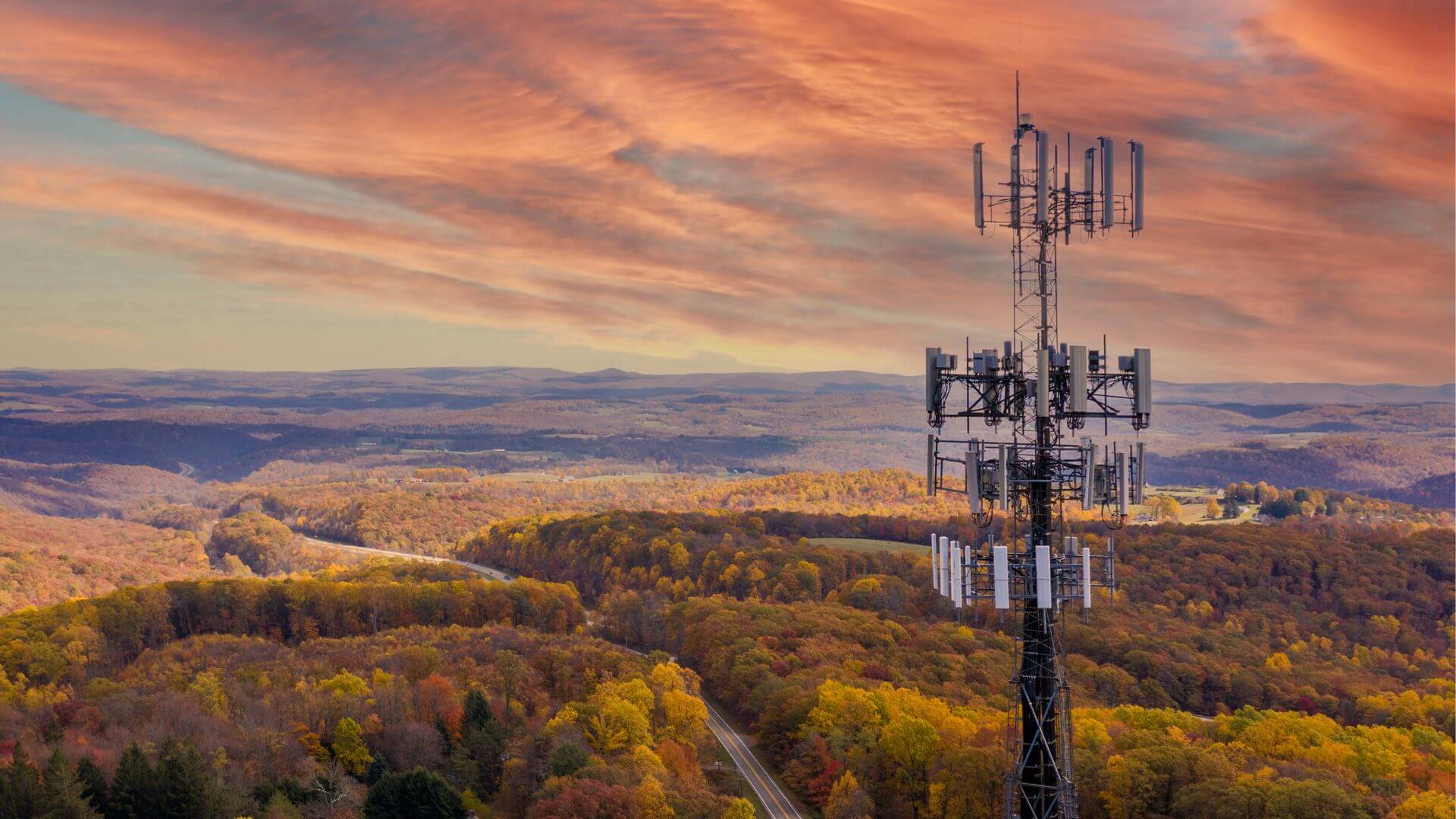
Mobile broadband operates by using cell towers and base stations that will work together in order to provide Internet access.
Coverage areas are made up of the cell towers that have been strategically placed in order to create the network area. These coverage areas are then managed by the base stations which oversee the communication between the cell towers and the devices that are within range.
When a device is connected, the data will be transmitted to the base station which will in turn reroute it to various networks to get to the Internet.
This is why users are able to have the high-speed Internet from wherever they are as long as they are within the coverage area. It’s more flexible because the connection doesn’t require any physical cables.
How Is The Environment Being Impacted?
Mobile broadband has certainly promoted social and economic development, especially in underserved areas. It has been at the forefront of driving technological innovations and making the Internet far more accessible than it once was.
However, it doesn’t come without its shortfalls. These mobile broadband networks such as 3G, 4G and 5G technologies also present significant impacts on the environment.
Extracting Raw Materials
In order to work, mobile broadband requires the use of mobile towers, base stations and data centres. This infrastructure needs raw materials such as copper and lithium in order to be produced.
The mining of these raw materials has raised concerns for the degrading impact that it has on the environment. As a result of mining, water sources have become polluted, biodiversity has been affected and deforestation has become more prominent.
Moreover, there is no infinite supply of raw materials. As an increase in infrastructure will demand more materials for production, the resource supply will rapidly diminish in a shorter amount of time.
Natural Habitats Are Disrupted
In order for cell towers and base stations to be built, there needs to be enough space for them which means that a fair amount of land needs to be cleared and allocated for them.
The demand for mobile broadband has led to the building of this infrastructure in more remote areas, which has directly disrupted the ecosystems in those areas. Migration patterns can be disrupted, the surrounding flora and fauna are damaged and soil erosion can take place over time.
The Effects Of Electromagnetic Radiation
With mobile broadband, data is transmitted by using electromagnetic radiation (EMR). While studies have shown that EMR is not an immediate danger to human health, it can still have an effect on wildlife.
Some species, such as birds and insects, rely on nature’s electromagnetic fields to guide their navigations. The radiation from networks can cause disruptions to this natural occurrence.
An Increase In E-Waste
As with all technology, mobile broadband infrastructure will require regular maintenance and upgrades.
When new infrastructure is produced, the old equipment will become obsolete. As this happens, electronic waste will significantly increase. If this waste isn’t recycled or disposed of properly, its toxic materials can poison soil and water sources.
Can These Issues Be Mitigated?
With broadband manufacturers and governments realising the impact on the environment, there are some steps being taken to minimise this impact.
Some companies are working to produce solar-powered base stations that can rely on renewable resources such as the sun. The stations are also often powered down if the demand in that area is low and not all of them are required to be running.
Refurbishing old equipment and recycling efforts are being taken to address the issue of e-waste, and manufacturers are working to produce infrastructure that has longer lifespans to avoid the constant need to upgrade them.
Currently, there is no way that mobile broadband infrastructure won’t affect the environment in some form but the more that companies, governments and the public work together to address it, there will be a greater chance of minimising the effects for future generations.