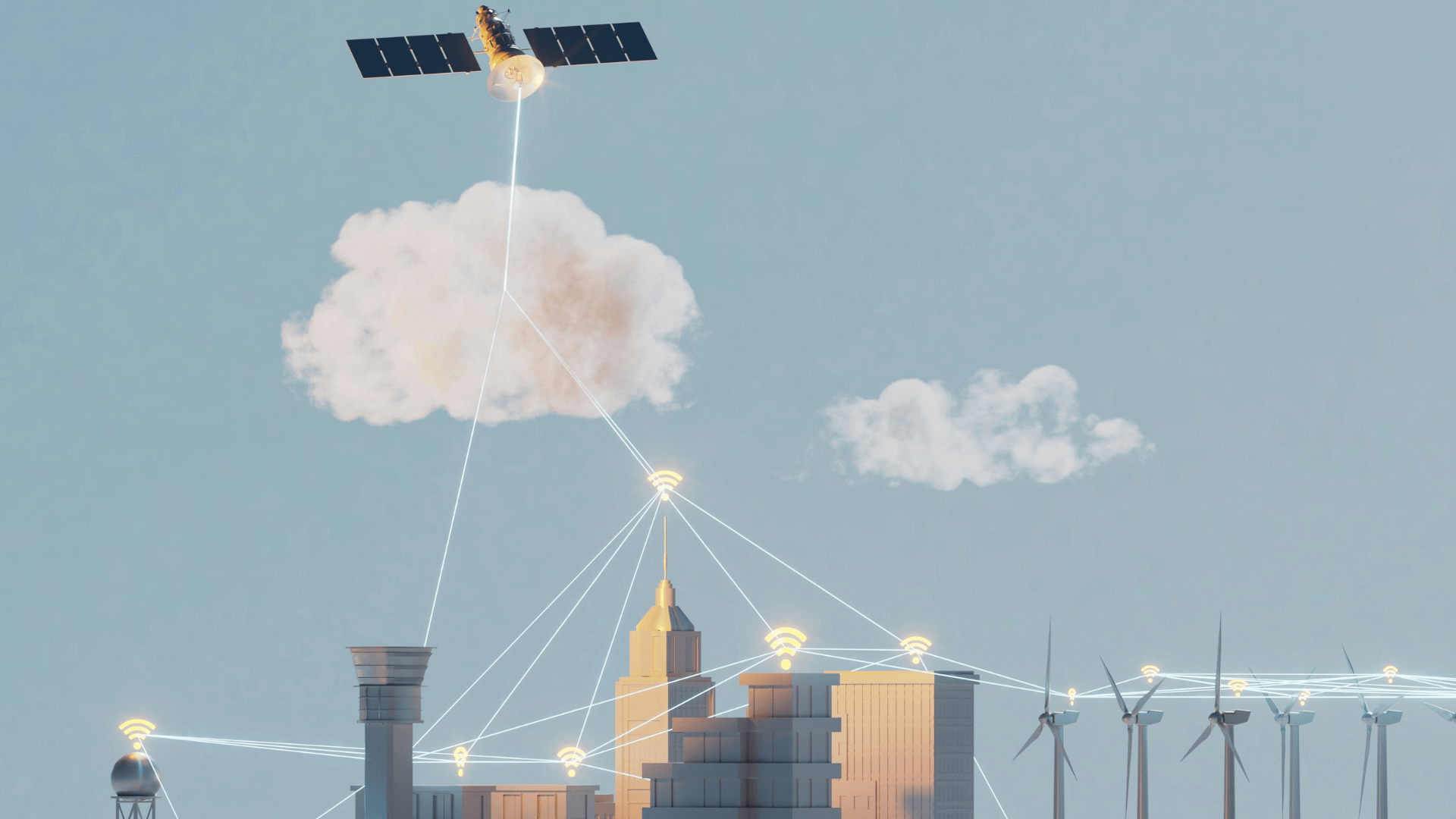
In conversations about smart cities and Internet of Things (IoT), things like AI-driven services and sensors become the centre of discussion. What isn’t spoken about nearly as much and plays such an important part is the foundation, which is mobile broadband.
Smart city applications create a massive amount of data in real-time that needs to move quickly between networks. This process is enabled by mobile broadband through widespread coverage and low latency.
And as 5G grows and 6G looms, more businesses and technology providers are starting to see mobile broadband’s value.
Our Experts
- Leyland Clowsley: Managing Director at Apex Manufacturing.
- Deepak Tailor: CEO & Founder of Latest Free Stuff.
- Bob Bilbruck: CEO of Captjur.
- Simon Landsheer: CEO & Founder of Truely.
- Matt Little: Founder & Managing Director at Festoon House.
- Benjamin Tom: Utility Specialist at Electricity Monster.
- Cal Singh: Head of Marketing & Partnerships at Equipment Financing.
- Doug Crawford: Founder of Best-Trade-Schools.net.
- Lourdes Sáez: CEO of Hey!Broadband.
- Niall Strachan: CCO at Pelion.
- Daniel Vasilevski: Owner and Director of Pro Electrical.
- Tiago Rodrigues: CEO of Wireless Broadband Alliance.
- Philip Otley: Managing Partner at HTEC.
Leyland Clowsley, Managing Director at Apex Manufacturing

Mobile broadband is the invisible force that will make smart cities actually smart. We’re not just talking about faster downloads we’re talking about real-time, city-wide intelligence.
As someone who leads a modern manufacturing company, I see this firsthand. Imagine traffic systems that respond in real time to congestion, rerouting vehicles dynamically. Or waste bins that alert collection teams only when full, saving fuel and reducing emissions. These aren’t future fantasies , they’re happening now, powered by fast, low-latency mobile networks.
In my business, we’re already exploring how mobile broadband enables micro-factory networks. These decentralised production sites can operate with real-time coordination, reacting faster to customer demand while supporting reshoring and reducing environmental impact.
If smart cities are the body, mobile broadband is the nervous system. Without it, nothing works together. From autonomous vehicles to predictive maintenance in infrastructure, mobile connectivity is the key that ties everything together. The real question is not if mobile broadband will shape the future of IoT and smart cities, but how quickly we can build the infrastructure to support it.
Deepak Tailor, CEO & Founder of Latest Free Stuff

Bob Bilbruck, CEO of Captjur

Mobile broadband will be the critical enabler of smart cities and IoT by providing the speed, low latency, and capacity required for real-time connectivity across millions of devices. With 5G and future networks, infrastructure such as traffic systems, utilities, and public safety services can operate with continuous data flows and instant responsiveness. This supports applications like adaptive traffic management, predictive maintenance of city assets, and optimised energy distribution.
For IoT, mobile broadband ensures reliable transmission from autonomous vehicles, smart meters, sensors, and wearables, creating an integrated ecosystem that improves efficiency and decision-making. The scalability of mobile broadband allows cities to support exponential device growth without performance degradation.
In essence, mobile broadband transforms urban environments into interconnected systems that are safer, more efficient, and more sustainable through data-driven operations.
Simon Landsheer, CEO & Founder of Truely

If smart cities are to live up to what’s really expected of the idea at the core, connectivity has to be more than that – it has to be fair, flexible and dependable.
One problem that has been normalised since the longest time is “breakage” – the hidden cost of data people pay for but never use, which is extremely important because data eventually is the fuel of smart cities.
If such flaws are built into the system of smart cities, they could replicate waste at scale, for example if the same happened in transport it would be alarming.
For us at Truely we argue that fixing this requires connectivity itself – treating it as a flexible utility that adapts to how people actually move and operate in the real world, rather than a business model built on waste.
Matt Little, Founder & Managing Director at Festoon House

I think that mobile broadband will alter the functioning of cities and IoT systems entirely, as everything will be swifter and will be more dependable. It is not only speed, but also about right on the spot decisions. In the smart cities all the devices should be able to communicate with each other within a moment. It can be traffic lights, streetlamps or energy grids, all of them need to work in harmony. This is achieved through mobile broadband where systems are flexible to adapt to changes and maintain everything in order.
In my opinion, the most significant effect is in such areas as event venues. Just think of being able to adjust to lighting, temperature and the flow of people with a single tap on the phone. It is the magic of mobile broadband. Cities and businesses will not be required to wait until systems can keep up. The IoT devices will communicate with each other instantly making everything far more responsive. This is not an imaginary notion. It is taking place at the present. The piece that is missing is mobile broadband that makes the whole thing work as it is supposed to be. It feels like a very thrilling moment and we are only at the beginning.
Benjamin Tom, Utility Specialist at Electricity Monster

Mobile broadband is a key component of any smart city, and it will affect many aspects, especially relating to energy use and IoT devices. From my nearly 3 years of working with energy utilities, I do think that mobile broadband will certainly help cities manage their energy use in new ways, particularly with 5G.
Mobile broadband is already improving energy efficiency in both Australia and the USA through smart technologies. For example, in Sydney, the City of Sydney’s smart grid takes real-time data from connected sensors to enhance balancing of energy load and consumption, and generally make the grid smarter. In California, Pacific Gas and Electric Company (PG&E) is implementing smart meters connected through a mobile network to monitor energy use and give way to dynamic pricing and to lower peak energy use.
Smart street lighting in Australian cities such as Melbourne goes with mobile broadband technology to adjust the lights in response to human activity and ambient light, conserving energy without losing an identified level of safety. In the USA, it’s possible to see that mobile broadband is key to developing electric vehicle (EV) charging networks, such as Tesla’s Supercharger network, to optimally use energy with real-time data and load balancing, while reducing disruptions to the grid.
Cal Singh, Head of Marketing and Partnerships at Equipment Financing

Mobile broadband will transform the functioning of smart cities and IoT in totality. With the development of technology, having fast and steady connection is no longer an option anymore. Mobile broadband, in addition to managing traffic, energy and safety in real-time, allows cities in general, and with the deployment of 5G technology in particular, to manage traffic, energy and safety in real time. Not just that it supports devices, but this network adds a system to the entire city where everything is communicating in real-time, and it is what allows us to solve the problems faster, and make better decisions. The urban environment will be transformed as the reconfiguration of the individual based systems to interdependent systems will render cities more efficient and open.
In my example, mobile broadband evens the playing field. Mobile broadband also offers connectivity where none exists in those places where the traditional broadband infrastructure has not been able to reach out to everyone with the smart city technology. This is what must be the answer to the construction of a just and interconnected city. The more IoT devices that are installed either traffic sensors, or pollution monitors, they require a constant connection. Mobile broadband allows connecting those devices and making them synchronised, and life safer and more efficient. This paradigm is already underway, and cities must react extremely quickly to stay abreast.
Doug Crawford, Founder of Best-Trade-Schools.net

Mobile broadband will be the game changer in the future of smart cities and the Internet of Things (IoT). It will help the devices in a city to have the ability to interact with each other in real-time with quicker and more dependable connections. This means the following that traffic lights, along with the movement of the population could be interconnected, which would make the work easier, less dense and the services of the state to the population better.
With the help of healthcare devices, real-time information can be relayed to physicians and so healthcare will become efficient. This information can all be shared instantly with the mobile broadband and the cities can start to be more responsive and efficient.
I view mobile broadband as the backbone that will spur the growth of smart cities and help them to become more integrated and improve the lives of citizens on a daily basis.
Lourdes Sáez, CEO of Hey!Broadband

Smart cities depend on strong, reliable digital infrastructure to deliver on the promise of IoT and data-driven services. Fibre was the first step; it remains the most reliable, high-capacity option and should be the foundation for our networks. Without it, many smart city initiatives risk being built on unstable ground.
That said, mobility is equally important. There are many situations where fixed fibre is not enough and that’s where mobile broadband plays a crucial role. The latest generation of mobile networks, particularly 5G, can in some respects rival full fibre in terms of speed and responsiveness. Used together, fibre and mobile broadband create a platform where innovation can thrive, whether that’s traffic systems that reduce congestion, energy grids that optimise in real time or healthcare services that reach patients more effectively.
As communities across the UK explore new connectivity models, towns such as High Wycombe are showing how enhanced digital infrastructure can lay the groundwork for smarter services in transport, healthcare and sustainability. But no single provider or technology can achieve this alone. Collaboration between network operators, technology partners, policymakers and communities will be essential to building smarter, greener, and more inclusive cities.
Niall Strachan, CCO at Pelion

Mobile broadband is already the foundation of smarter cities, and as networks grow faster and more resilient, they will unlock even greater possibilities: picture predictive maintenance at scale, adaptive energy use, and fully automated operations.
Future mobility will be equally transformed. Connected traffic systems will optimise flow, reducing congestion, fuel usage, and pollution, while intelligent routing of buses and waste collection will create leaner, greener cities. With mobile broadband at the core, urban services will increasingly adapt dynamically to demand.
Safety and resilience will also be redefined. Drones and connected cameras will provide live situational awareness, while IoT sensors track hazards such as flooding or air quality. In times of disaster, when other systems falter, cellular networks will remain a critical lifeline, keeping citizens and responders connected. Just as importantly, connectivity acts as a catalyst for economic growth and prosperity, attracting investment, driving innovation, creating jobs, and ultimately raising living standards.
For people, the promise is transformative: smarter healthcare, universal digital inclusion, seamless mobility, and entirely new experiences powered by AR, VR, and future innovations. Ultimately, the intelligence of our cities will depend on the strength of their connectivity, and mobile broadband will be the key that unlocks it.
Daniel Vasilevski, Owner and Director of Pro Electrical

Mobile broadband will transform smart cities and IoT in many ways that are not necessarily considered. Everybody talks about speed and in reality, reliability is the game changer. A smart city is not only traffic lights and smart meters but thousands of sensors and devices that consume energy, send information and need to run and remain connected without interruption and without a power outage lasting even a few minutes. The loss of connection of a streetlight sensor is annoying, but the loss of connection of medical monitors in institutions is more dangerous. Broadband enables such density of devices to work in concert with less interference and with lower latency and this is what makes large-scale systems viable.
From an electrical perspective, the future will demand power networks that can sustain constant data exchange without disruption. The physical wiring and grid connections must grow in step with wireless advances. Otherwise, smart cities risk being built on fragile ground.
Tiago Rodrigues, CEO of Wireless Broadband Alliance

Smart cities won’t feel smart if your smartphone keeps asking for a Wi-Fi password. The next wave of mobile broadband will be Wi-Fi 7 working hand-in-hand with 5G to deliver seamless connectivity that powers smart city services and IoT innovation. It will create an always-on fabric that people don’t have to think about. With OpenRoaming, your device auto-connects securely as you move from the street to a bus, a clinic or a campus. There are no captive portals and no drop-outs. Just privacy-protected connectivity that ‘just works’.
Wi-Fi 7 brings fibre-like responsiveness to busy places like stations, stadiums, lecture halls so that apps feel instant and services like ticketing, tele-health and real-time translation keep up with you. And at street level, long-range, low-power tech like Wi-Fi HaLow lets cities deploy thousands of sensors for air quality, water leaks, parking and lighting without draining batteries or budgets.
Broadband connectivity done this way is about more than speed. It’s inclusion and sustainability. When wireless connectivity is seamless, secure and interoperable, you enable safer streets, smoother journeys and lower emissions for everyone. Not just those with the newest handset. At WBA, we’re working with operators, device makers, and city leaders to make that future open by design and available to all.
Philip Otley, Managing Partner at HTEC

Smart cities will remain a blueprint unless the networks that connect them are fast, reliable and intelligent. The groundwork might be laid by fast fibre networks (10G-Pon, XGS-Pon, etc) and mobile broadband (5G & later), but smart cities only become real when ultra-fast networks are paired with intelligence and automation at the edge.
In a smart city, thousands to millions of devices are constantly uploading data to the network – sensors, cameras, autonomous systems. With these significant, uplink-heavy traffic flows, the network has to be able to move data reliably at low latency. It also requires network slicing so that essential services avoid disruption, and needs to be able to prioritise bandwidth for emergency services and energy grids, regardless of traffic. If a network can’t achieve this, the smart city fails. Mobile broadband is the enabler in this situation, playing a critical role in facilitating ultra-fast connectivity across all devices.
These network capabilities not only make smart cities viable, but they create new opportunities for telcos. They can move away from just selling connectivity to adding value as service providers, service enablers, and creating digital experiences. Operators can build edge platforms that host applications closer to where data is generated, they can offer managed IoT services and utilise AI to generate insights and take action from the data flowing through their networks. Think of tomorrow’s telecoms network as the central nervous system of the smart city. They can deliver on the smart city promise while creating new revenue and real social impact.